THREADS
Volume XII · Spring/Summer · The Quiet Jacket Issue




Why the blazer outlived
every trend it was dressed in.
A seasonal dossier on the garment that refuses to leave — its provenance in tailoring rooms, its life on thrift racks, and the specific way morning light catches a deconstructed shoulder.
The blazer did not survive because it was versatile. It survived because it carries the memory of the body that wore it first — the cut remembers a shoulder, the lining holds the ghost of a perfume. Every time it reappears on a runway, on a sidewalk, on a thrift rack at seven in the morning, it is not a trend. It is a negotiation.
"Getting dressed is the first creative act of the day — and the most honest one. It does not lie about who you are trying to become."
— Threads, Vol. XII Editorial
This issue is a study of the blazer not as a garment category but as a cultural document. We traced its silhouette from the 1940s military surplus jacket to the 1980s power shoulder, through the deliberate deconstruction of the 1990s, and into the current moment — where the deconstructed blazer over a slip dress has become the shorthand for a particular kind of knowing ease.
We spoke to women who have worn the same blazer for fourteen years. We photographed it at 7 a.m. on residential sidewalks because that is when clothes are most honest — before the meeting, before the occasion, in the ordinary light of a Tuesday in October.
112
Years of blazer history documented
34
Thrift sources across 8 cities
6
Outfit breakdowns, one silhouette
The Deconstructed Blazer
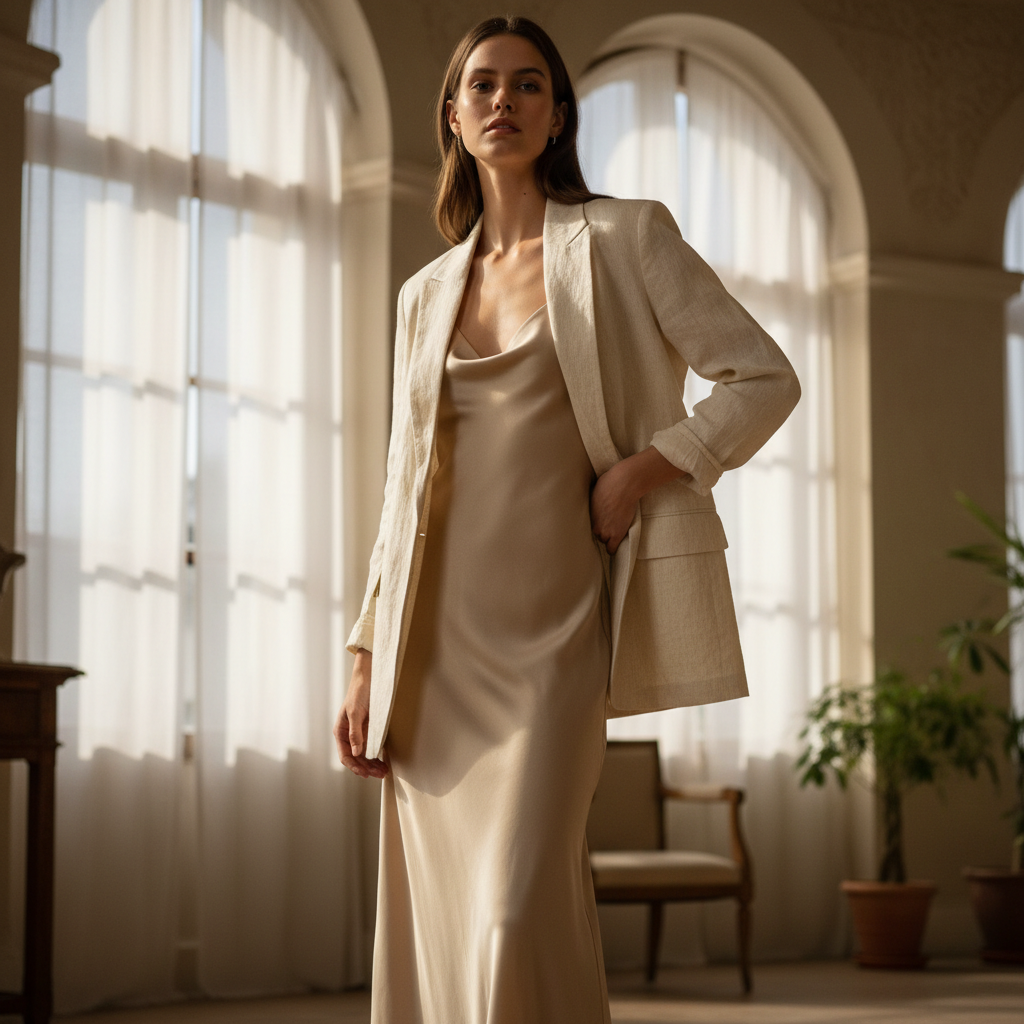
Menswear tailoring over a bias-cut slip, morning light
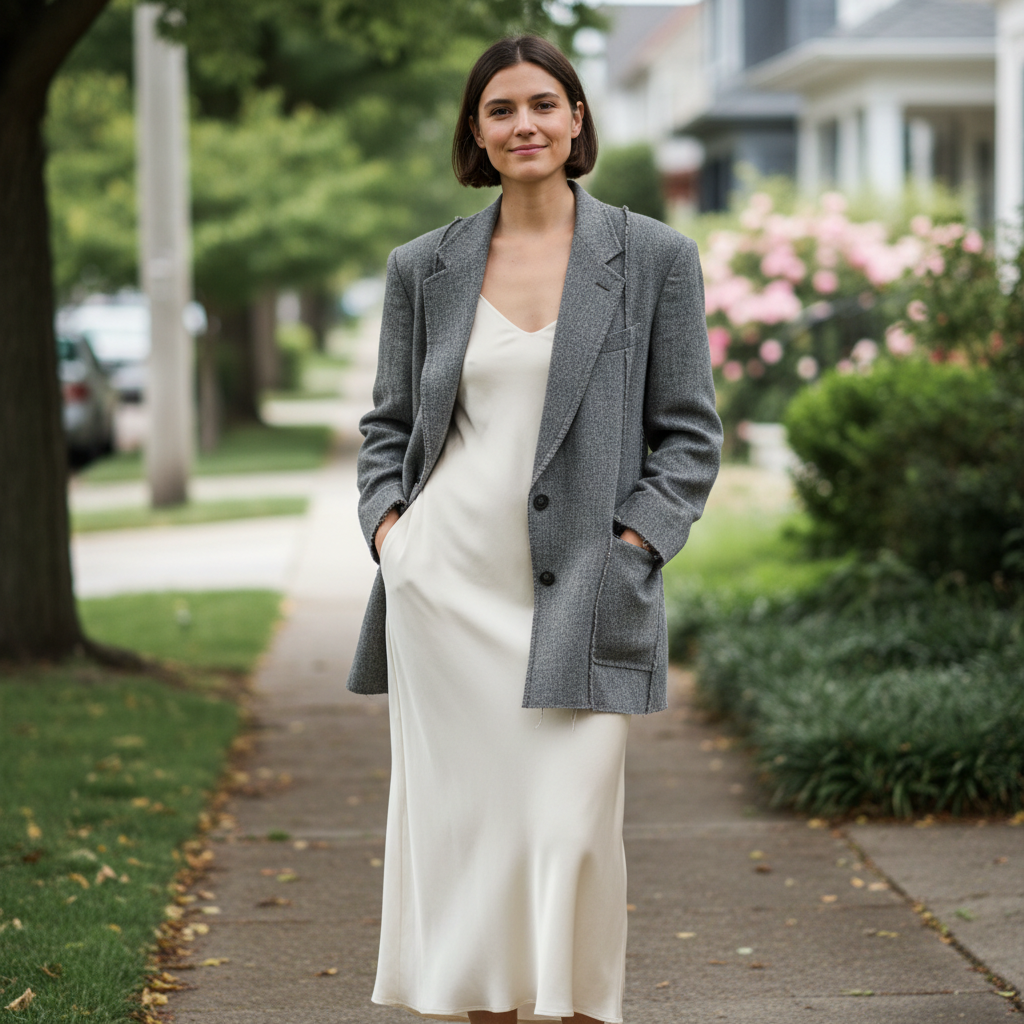
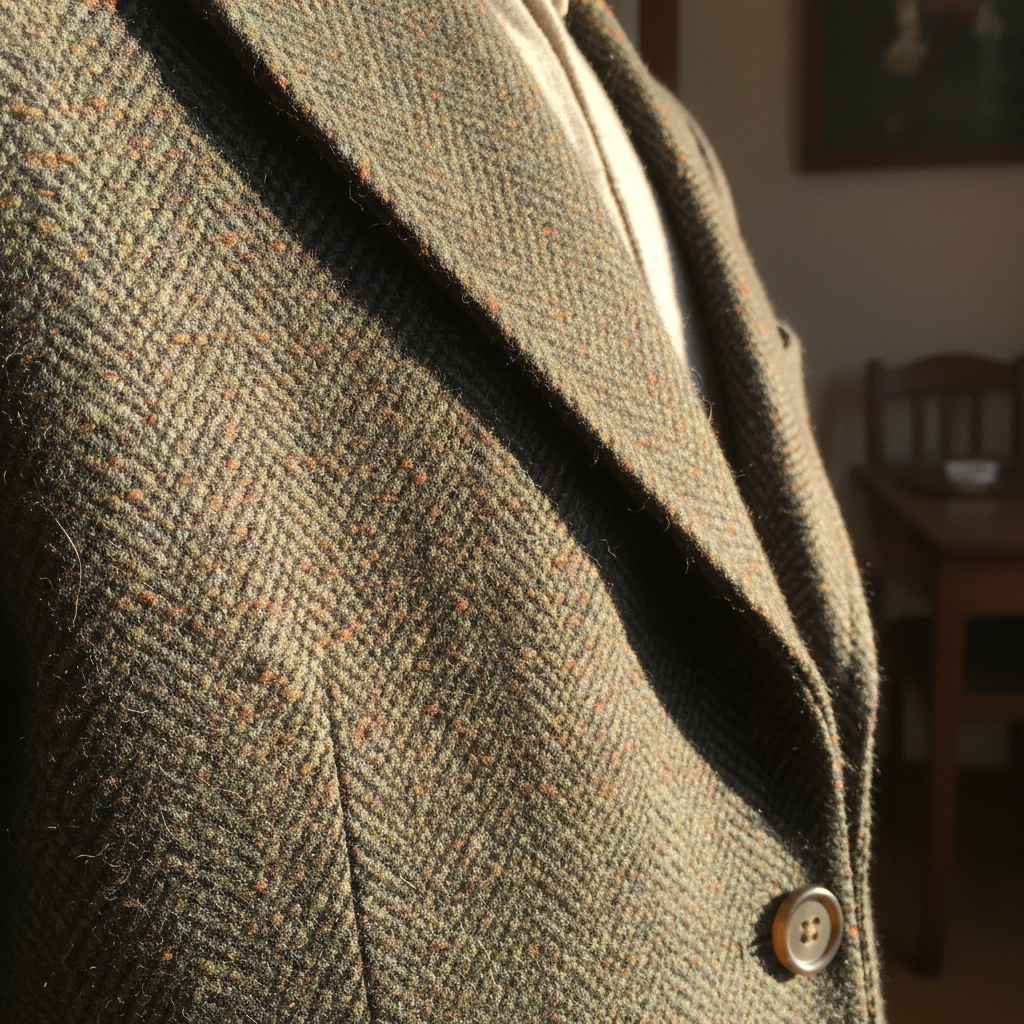
Notched lapel, hand-stitched, c.1994 — the asymmetry is deliberate
Unpadded, natural fall — the opposite of power dressing
Slip dress cut two inches below jacket hem — the proportion matters
Notched lapel, hand-stitched, c.1994 — the asymmetry is deliberate
Unpadded, natural fall — the opposite of power dressing
Slip dress cut two inches below jacket hem — the proportion matters
Garment Provenance
The Styling Decision
The slip dress grounds the blazer in the body. Without it, the blazer becomes costume. With it, the blazer becomes character.
The Camel Overcoat
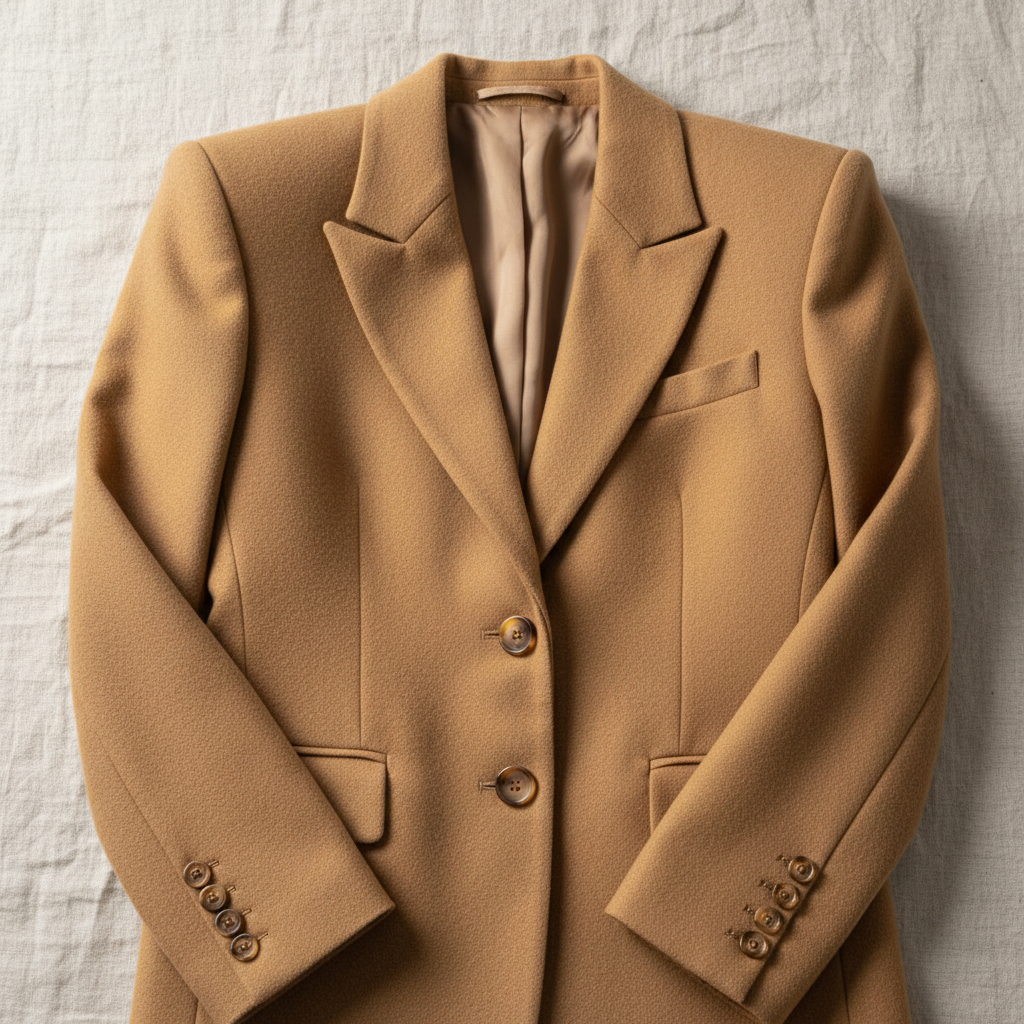
A coat that functions as a room — warm without effort
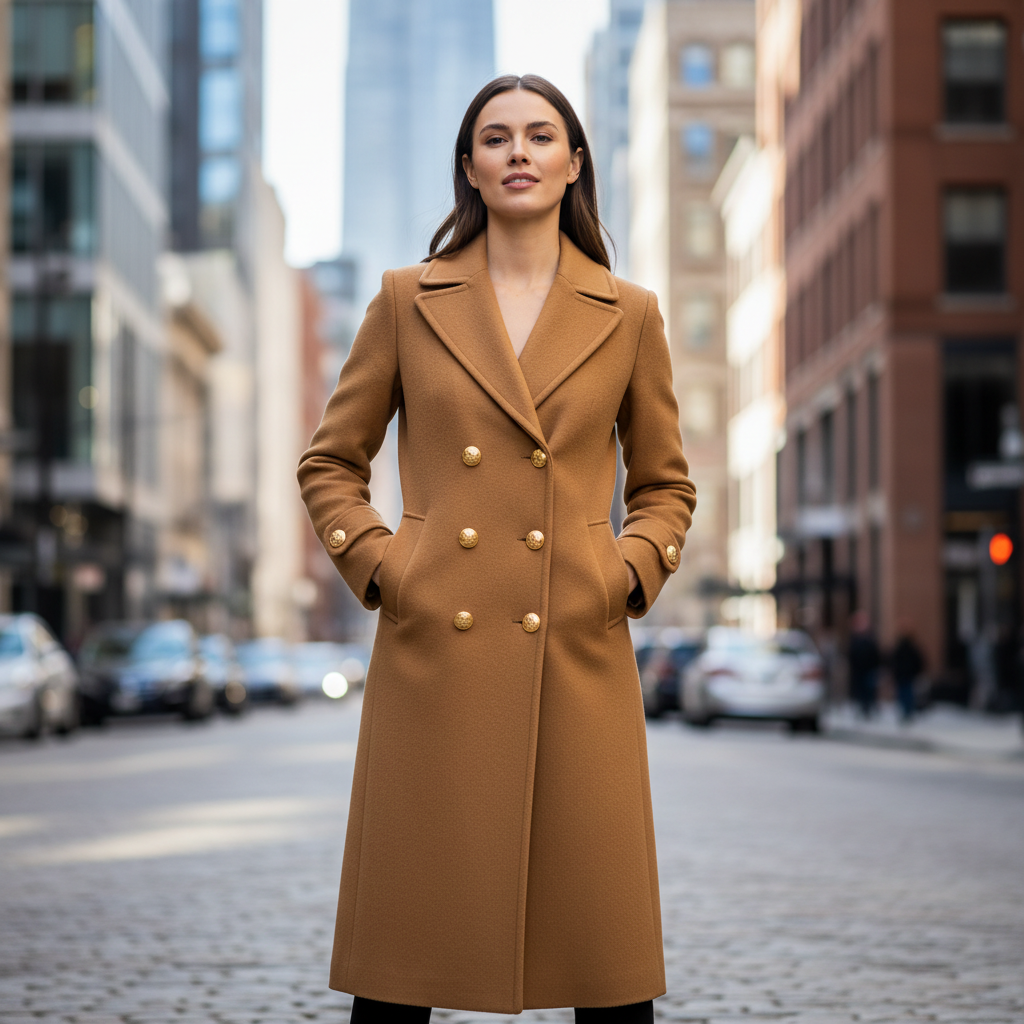
Original belt, worn loose — the knot signals ease, not effort
Turned up on one side only — the asymmetry is the styling decision
Below-knee is the correct length — above-knee is a different coat
Original belt, worn loose — the knot signals ease, not effort
Turned up on one side only — the asymmetry is the styling decision
Below-knee is the correct length — above-knee is a different coat
Garment Provenance
The Styling Decision
A camel coat is not a neutral. It is a statement of restraint. The colour already says everything — the rest of the outfit should listen.
The Linen Suit
Worn separately, worn together — the suit that refuses ceremony

Single button, worn open — the chest is part of the composition
Wide-leg, full break — linen needs volume to drape correctly
Stone-washed linen, 230g/m² — heavy enough to hold the line
Single button, worn open — the chest is part of the composition
Wide-leg, full break — linen needs volume to drape correctly
Stone-washed linen, 230g/m² — heavy enough to hold the line
Garment Provenance
The Styling Decision
The linen suit works because it wrinkles. The wrinkle is not a flaw — it is the evidence of a life being lived in the garment, not preserved for it.
The Trench Coat Silhouette, 1914–2026
Relative shoulder width as a measure of cultural intent
Gabardine, double-breasted, storm flap
Burberry popularizes; belted silhouette
Audrey, Bardot — trench as archetype
Shoulder pads, exaggerated width
Margiela removes structure, keeps memory
Oversized, genderless, cropped variants
Vintage sourcing, cost-per-wear logic
Wardrobe Investment Breakdown
Where the considered dresser actually spends
Where the Best Vintage Originates
Five cities, five specific sourcing addresses
New York
Menswear, 90s
Paris
French tailoring
London
Military surplus
Tokyo
Workwear, denim
Milan
Italian tailoring
The private extension of what you've already read.
Each season, we compile a dossier — outfit breakdowns not published on the page, sourcing guides for the cities we've researched, a reading list on the history of the garments we've covered. It goes only to readers. There is no paywall. Only a first name and an email.
The Autumn/Winter Dossier
Vol. XII · The Quiet Jacket Issue
Not ready to subscribe? Browse the Archive — past seasonal issues, always free.